
Description
Product Overview
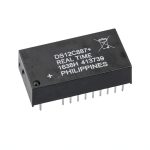
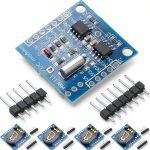
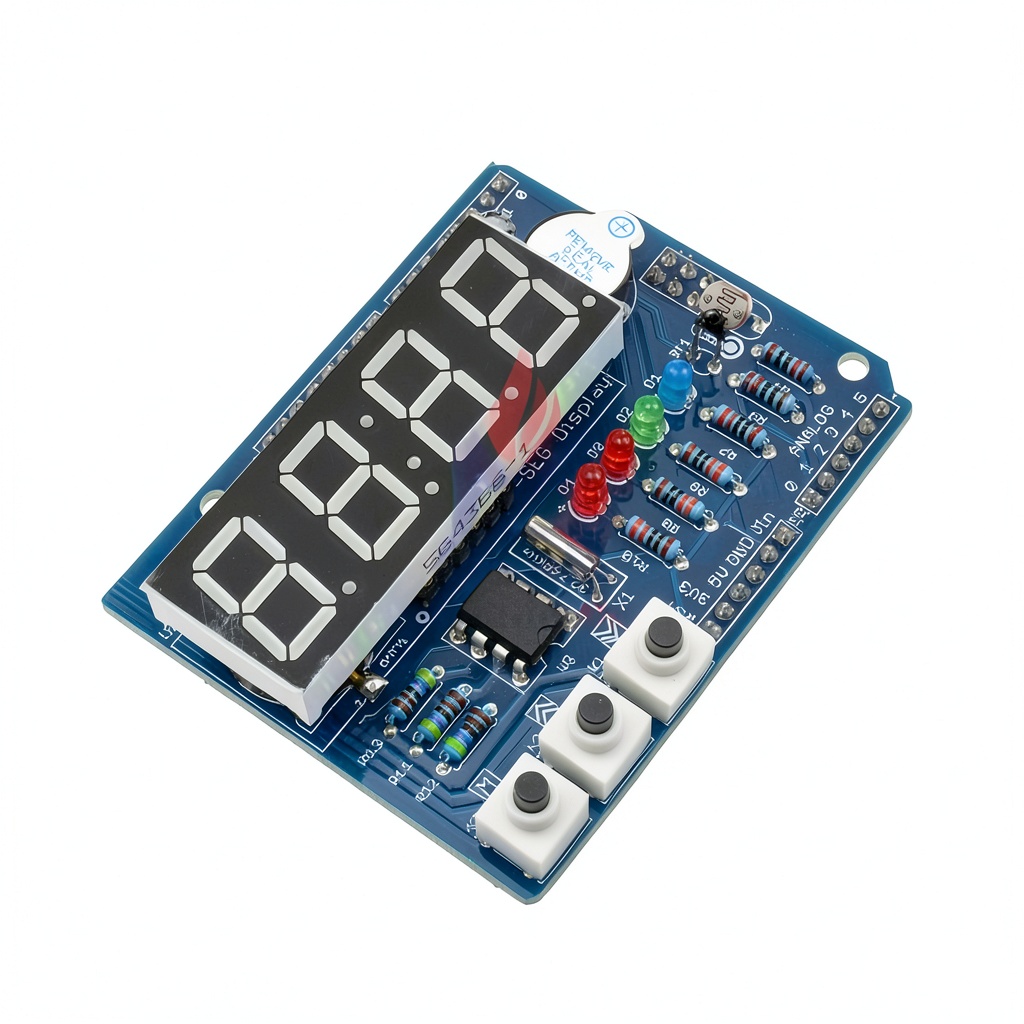
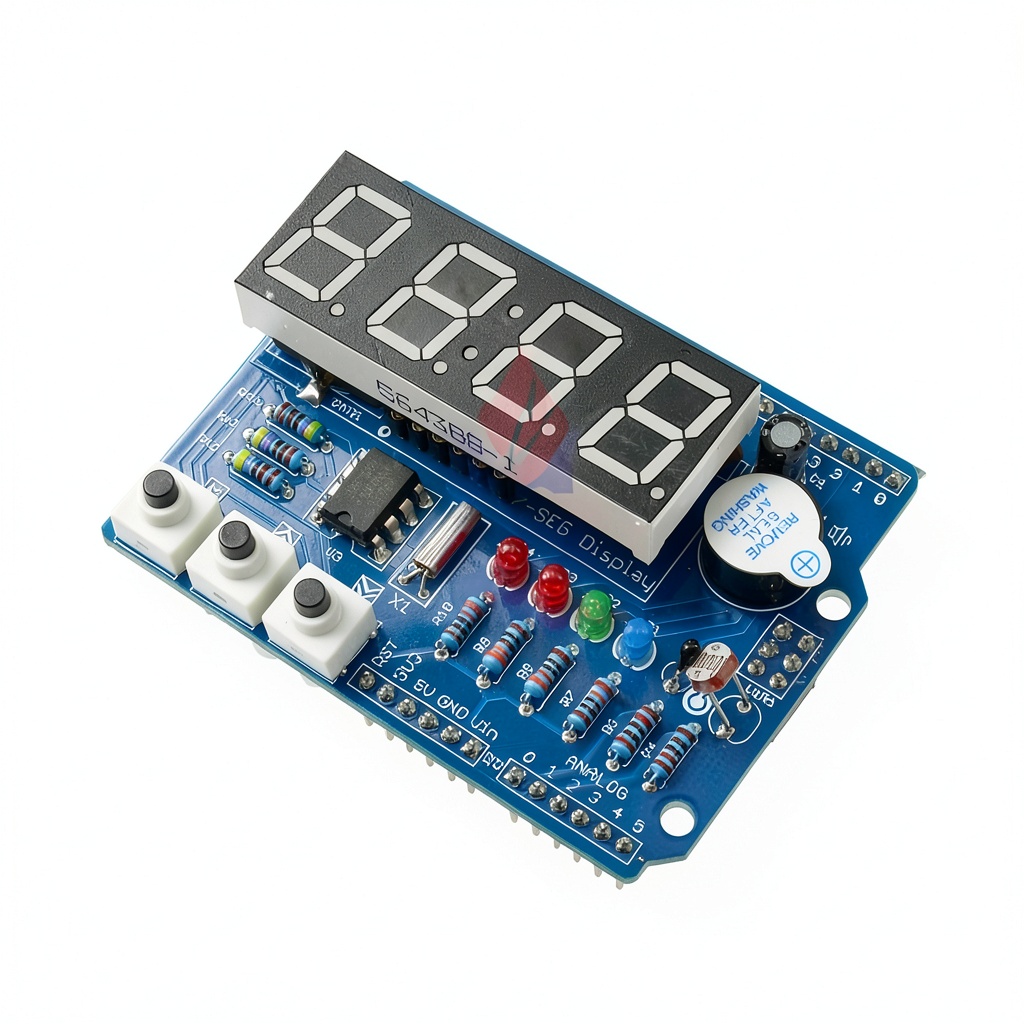
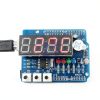
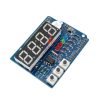
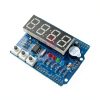
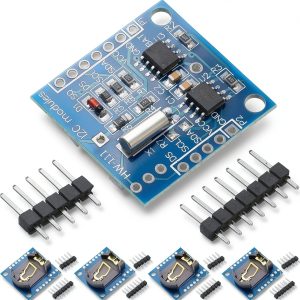
The Paialu RTC TM1636 DS1307 Real Time Clock Shield is engineered to deliver precise and reliable timekeeping for a wide range of Arduino‑based projects. Built around the industry‑standard DS1307 chip, the module maintains accurate seconds, minutes, hours, day, date, month, and year information even when power is removed, thanks to its integrated 3 V backup battery holder. The shield features a compact, double‑sided PCB layout that fits neatly onto an Arduino Uno or compatible board, minimizing space consumption while providing robust I2C connectivity for straightforward communication with the host microcontroller.
Key specifications include a 32.768 kHz crystal oscillator for stable timing, a low‑power consumption design that draws less than 500 µA during active operation, and a voltage range of 2.0 V to 5.5 V, making it compatible with both 3.3 V and 5 V Arduino environments. The module’s pins are clearly labeled, and the board incorporates protective resistors and filtering capacitors to guard against voltage spikes and electromagnetic interference, ensuring long‑term durability in both hobbyist and industrial settings.
![[Product front view showing all components]](https://www.bestquickgo.store/wp-content/uploads/2026/07/927670e97a66421e8885a9316b84a8e5.jpg)
Usage
Designed with makers, educators, and engineers in mind, this clock shield integrates seamlessly into data‑logging stations, home automation systems, and portable sensor networks. Whether you are building a weather station that timestamps sensor readings, a smart irrigation controller that schedules watering cycles, or a classroom experiment that demonstrates time‑based logic, the shield provides a dependable time base without the need for complex external circuitry.
Installation is as simple as aligning the shield’s pin headers with the Arduino’s sockets and securing it with a few screws. Once mounted, the module can be accessed via the standard Wire library, allowing developers to read and set the time with just a few lines of code. The I2C address (0x68 by default) can be changed with a simple solder bridge if multiple RTC devices share the same bus, offering flexibility for more advanced projects that require multiple time sources.
Because the shield includes a dedicated battery holder, the real‑time clock continues to run even when the main board is powered down, preserving timestamps for events that occur during power outages. This feature is especially valuable for remote deployments where power reliability cannot be guaranteed.
Why Choose Us
Paialu is committed to delivering high‑quality electronic components that meet rigorous industry standards. Each RTC shield undergoes a comprehensive testing process that verifies timing accuracy, I2C communication reliability, and mechanical robustness. Our manufacturing partners employ lead‑free solder and RoHS‑compliant materials, ensuring that the product is both environmentally responsible and safe for use in educational environments.
Beyond the hardware, Paialu provides extensive documentation, including schematic diagrams, wiring guides, and example Arduino sketches that accelerate development time. Our technical support team is available to assist with integration challenges, firmware updates, and troubleshooting, guaranteeing that customers receive the assistance they need throughout the product lifecycle.
Choosing the Paialu RTC shield means investing in a component that balances performance, ease of use, and long‑term reliability, making it a trusted choice for both prototype development and production‑grade applications.
Key Features
- Accurate DS1307 chip maintains time with battery backup for uninterrupted operation
- Compact double‑sided PCB fits neatly on Arduino Uno and compatible boards
- I2C interface simplifies communication and reduces wiring complexity
- Wide voltage range (2.0 V‑5.5 V) supports both 3.3 V and 5 V systems
- Responsive customer support and detailed documentation for quick project start‑up
FAQ
Can the RTC shield operate without a backup battery?
Yes, the shield will function while powered, but the time will reset when power is lost. Installing a 3 V coin cell in the provided holder preserves the clock during outages.
Is the I2C address configurable?
The default I2C address is 0x68. It can be changed by soldering a small bridge on the board, allowing multiple RTC modules on the same bus.
What Arduino libraries are required to use this shield?
The standard Wire library included with the Arduino IDE is sufficient. Paialu also provides example sketches that demonstrate reading and setting the time.
Is the shield compatible with Arduino Mega and other larger boards?
Yes, the pin layout aligns with the standard Arduino header footprint, making it compatible with Mega, Nano, and other form factors that share the same header configuration.
How accurate is the timekeeping over long periods?
When powered by a stable crystal and a fresh backup battery, the DS1307 maintains accuracy within ±2 seconds per day, which is suitable for most hobbyist and moderate‑precision applications.
 Starlink Gen 3 Mount Powder Coated GADFISH Satellite TV
 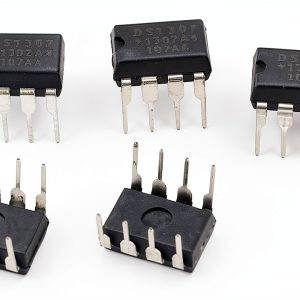 DS1307 Real-Time Clock IC by IIVVERR 5-Piece DIP-8 56-Byte Serial RTC
  Premium Leather Wallet ClassicCo Minimalist Design
 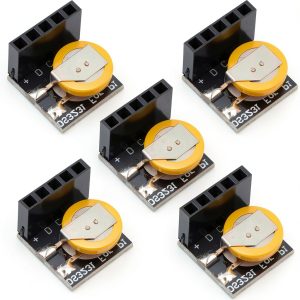 DS3231 hiBCTR High Precision RTC Module 3.3V/5V Dual Voltage 5 Pack
Reviews
There are no reviews yet.