
Description
Product Overview
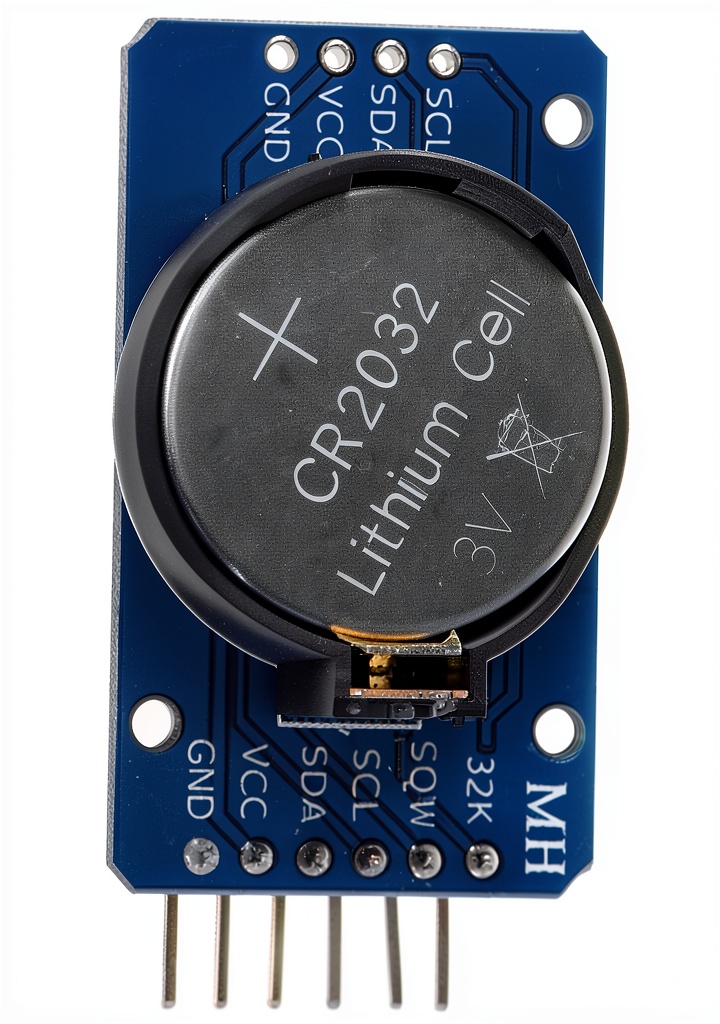
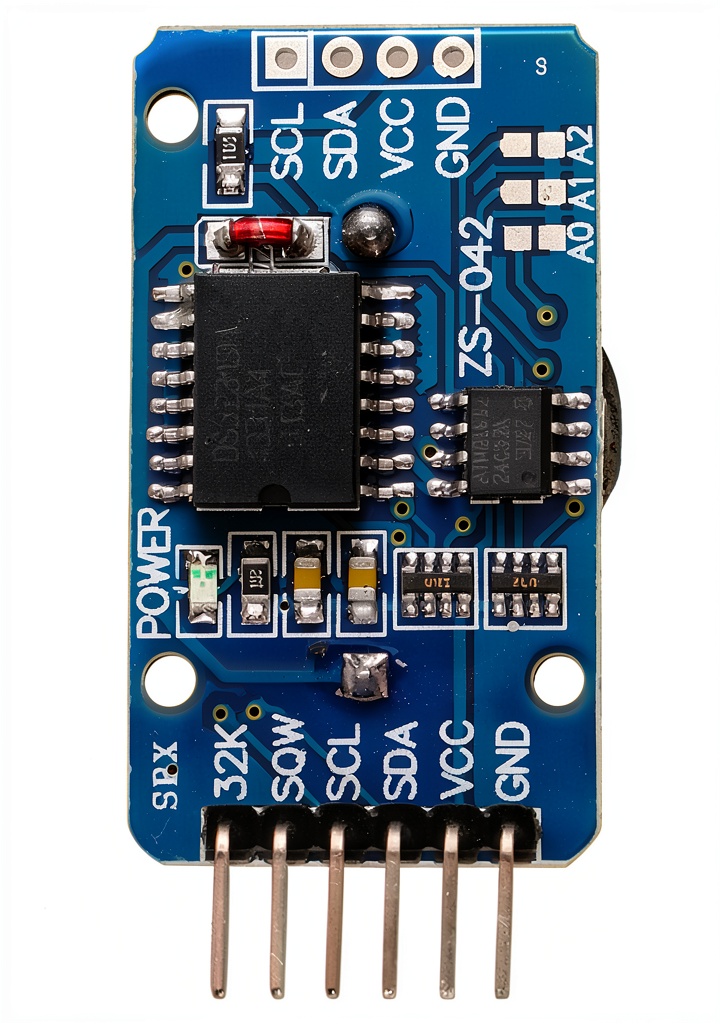
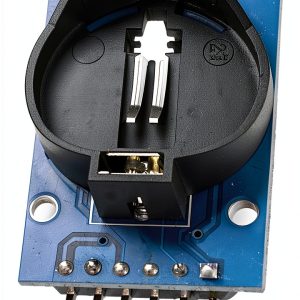
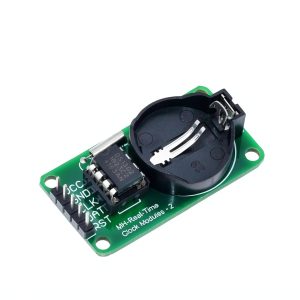
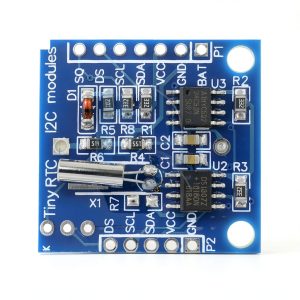
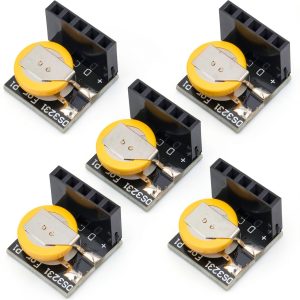
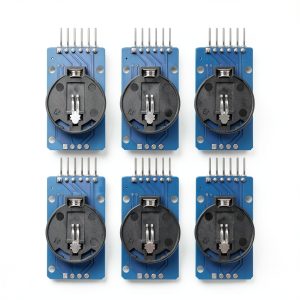
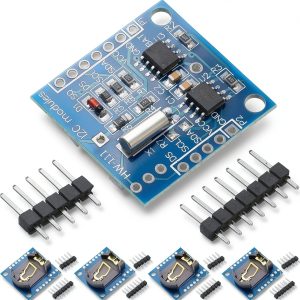
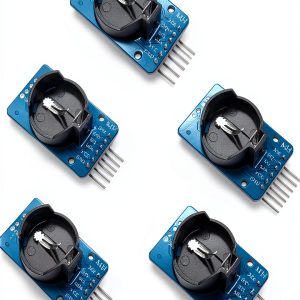
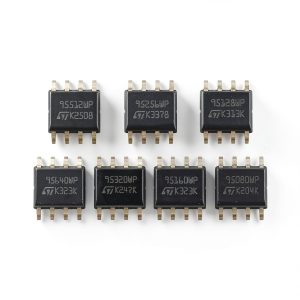
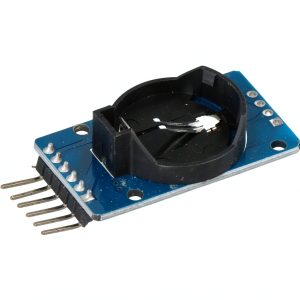
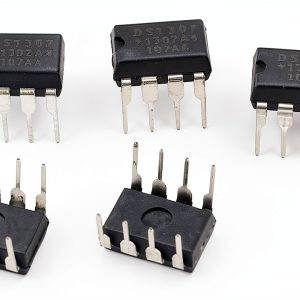
The Mixse DS3231 RTC module is engineered to deliver industrial‑grade timekeeping accuracy in a compact, breadboard‑friendly package. At its heart lies the DS3231 high‑precision clock chip, a temperature‑compensated crystal oscillator (TCXO) that maintains accuracy within ±2 ppm from –40 °C to +85 °C, far surpassing standard crystal oscillators. Complementing the clock is the AT24C32 EEPROM memory, offering 32 KB of non‑volatile storage for configuration data, event logs, or user settings. The module operates on a wide voltage range of 3.3 V to 5.5 V, making it compatible with 3.3 V and 5 V microcontroller ecosystems alike. Its I²C interface follows the standard SMBus protocol, allowing seamless integration with Arduino, Raspberry Pi, ESP32, and other platforms. The board includes a programmable square‑wave output that can be set to frequencies ranging from 1 Hz to 1 kHz, enabling developers to generate precise timing pulses without additional components. The dual‑module package provides two identical units in a single shipment, ideal for prototyping multiple projects or creating redundant time‑keeping systems. All components are surface‑mounted for reliable soldering, and the layout minimizes stray capacitance to preserve signal integrity. The module’s compact footprint (approximately 30 mm × 20 mm) fits easily into tight enclosures while still offering clear silk‑screen markings for SDA, SCL, VCC, GND, and the square‑wave pin.
![[Product front view showing all components]](https://www.bestquickgo.store/wp-content/uploads/2026/08/42ff448ebcc84cc8a6cc6d5288a986f8.jpg)
Usage
Designed for a broad spectrum of applications, the DS3231 module excels in data‑logging devices, environmental monitoring stations, and any project that requires accurate timestamps. Hobbyists building weather stations can store sensor readings with precise date and time stamps, while engineers developing industrial automation systems can rely on the module’s stability for event sequencing and logging. The wide operating voltage range ensures the module works with both 3.3 V and 5 V logic, allowing it to be paired with popular development boards such as the Arduino Uno, Nano, Mega, and the ESP8266/ESP32 families. Its I²C address (0x68) is standard, but the AT24C32 memory can be addressed separately, enabling simultaneous access to time data and stored configuration without bus contention. The programmable square‑wave output is useful for generating periodic interrupts, driving LED indicators, or synchronizing other peripherals. Because the module includes two units, developers can implement a primary‑secondary configuration, where one module serves as a backup clock in case of power interruption, ensuring continuous operation. The module’s low power consumption (approximately 300 µA at 3.3 V) makes it suitable for battery‑powered devices, and its built‑in crystal oscillator eliminates the need for external components, simplifying circuit design and reducing overall BOM cost.
Why Choose Us
Mixse’s reputation for quality control and component reliability underpins every DS3231 module we produce. Each unit undergoes a rigorous testing process that includes temperature cycling, voltage stress, and I²C communication verification to guarantee that the clock maintains its specified accuracy across the full operating range. The integration of the AT24C32 EEPROM provides a unique advantage over competing modules that often lack non‑volatile storage, allowing users to retain configuration data even after power loss. Our modules are manufactured with lead‑free, RoHS‑compliant materials, ensuring they meet environmental standards and are safe for use in consumer electronics. In addition, Mixse offers comprehensive technical support, including detailed datasheets, wiring diagrams, and example code libraries for Arduino and other platforms. Should you encounter any issues, our dedicated support team is available to assist with troubleshooting, firmware updates, and design recommendations. We also provide a 12‑month warranty that covers manufacturing defects, giving you confidence in the long‑term performance of your time‑keeping solution. By choosing Mixse, you benefit from a combination of precision engineering, robust documentation, and a customer‑centric approach that prioritizes your project’s success.
Key Features
- High‑precision DS3231 clock chip with temperature compensation for ±2 ppm accuracy
- Integrated 32 KB AT24C32 EEPROM provides reliable non‑volatile storage for settings and logs
- Wide 3.3 V‑5.5 V operating range ensures compatibility with most microcontroller platforms
- Programmable square‑wave output offers flexible timing signals without extra components
- Comes with dedicated technical support and a 12‑month warranty for peace of mind
FAQ
What is the difference between this module and a standard DS1307 RTC?
The DS3231 includes an integrated temperature‑compensated crystal oscillator, providing far higher accuracy (±2 ppm) compared to the DS1307’s ±20 ppm. Additionally, the DS3231 offers a built‑in 32 KB EEPROM, whereas the DS1307 does not have non‑volatile storage.
Can I use the module with a 5 V Arduino board?
Yes. The module operates from 3.3 V to 5.5 V, so it can be directly powered by a 5 V Arduino. Just connect VCC to 5 V, GND to ground, and use the SDA and SCL pins for I²C communication.
How do I access the EEPROM memory without interfering with the clock?
The AT24C32 EEPROM is addressed on the same I²C bus but uses a different internal address space. By sending the appropriate memory address bytes after the device address (0x57 for the EEPROM), you can read or write data without affecting the DS3231 time registers.
Is the square‑wave output configurable?
Yes. The DS3231 allows you to set the square‑wave frequency to 1 Hz, 1.024 kHz, 4.096 kHz, or 8.192 kHz via its control registers. This can be done using standard I²C write commands from your microcontroller.
What warranty and support does Mixse provide?
Mixse offers a 12‑month warranty covering manufacturing defects and provides technical assistance through email and online forums. Detailed documentation, example code, and schematic diagrams are also available to help you integrate the module quickly.


























































Reviews
There are no reviews yet.